

How to get custom packaging made: a step-by-step guide for UK brands
A step-by-step guide to getting custom packaging made: choosing a route, sizing with samples and dielines, artwork, proofs, minimum orders and EPR.
To get custom packaging made, decide what the pack must do, choose a format (stock packaging with your label, a standard format printed with your artwork, or a fully bespoke design), confirm sizes with a sample and a dieline, prepare print-ready artwork, approve a proof, then place the order. Most delays come from the early steps, unclear sizes and late changes to artwork, so settle those first. This guide is how to get custom packaging made without surprises, written for UK small and growing brands.
Step 1: Decide what the packaging has to do
Before talking to a supplier, write down what the pack needs to achieve. A short brief saves rounds of back and forth.
- Protect: Does the product need a barrier against air, light or moisture? Does it break or leak?
- Inform: What must the pack say by law for your product type, and what do you want it to say?
- Sell: Will it hang, stand on a shelf or arrive by post? Who is the buyer?
- Close safely: Does your product need a child-resistant or tamper-evident closure?
- Fit the budget and volume: How many units will you sell in the first few months, and how often will you reorder?
Answering these points also tells you which suppliers are a good fit. A supplier who makes cartons may not make bags, and a label printer may not supply the containers.
Step 2: Choose the right route
There are three common ways to get branded packaging. Each suits a different stage of a business.
| Route | What it means | Suits | Examples from our range |
|---|---|---|---|
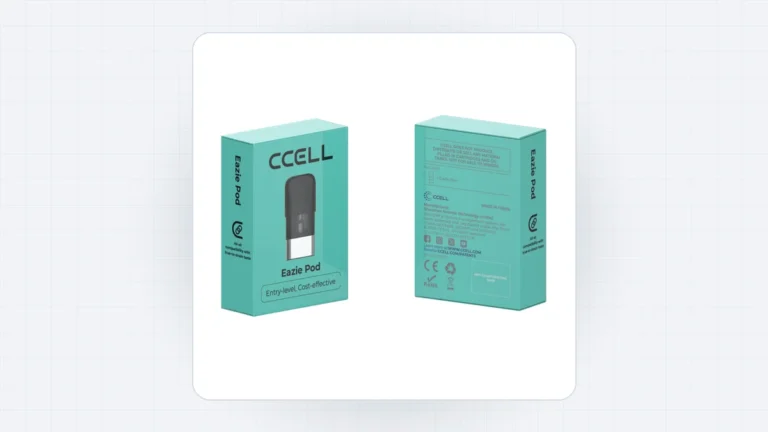
| Stock packaging plus a custom label | A ready-made container or bag with your printed sticker | New brands, test launches, wide product ranges | Plain mylar bags with a sticker, glass jars with a wrap label, the CCELL Eazie plain-front box with a front sticker |
| Standard format, custom printed | A set size and style printed all over with your artwork | Brands ready to commit to a look | Custom printed mylar bags in four sizes, printed tuck boxes in small, medium and large |
| Fully bespoke | A size, structure or finish made for your product | Established ranges, unusual products, premium launches | Quoted to your brief |
Why many small businesses start with labels
Custom packaging for a small business in the UK often starts with stock packaging and a good label. You can launch several products with one container type, change artwork between batches and learn what sells before you commit to fully printed packs. A well-designed sticker on a quality bag or jar looks professional on a shelf.
When to move to full print
Fully printed packaging makes sense once a product sells steadily and its artwork is stable. Print on the whole pack gives you the back and sides for legal text, brand story and contact details, and it removes the labelling step from your packing line.
Step 3: Get the size right with a sample
Size is where most custom packaging goes wrong. A product that “should” fit can be too tight once it has a leaflet, an insert or headspace for sealing.
- Measure the product in the form you actually sell it, including any inner pack or leaflet.
- Order a plain sample of the format you are considering and test-fill it.
- Check closure and seal. Bags need headspace above the zip; boxes need room for tuck flaps to close flat.
- Ask for the dieline once the size is settled, and design only on that file.
Our tuck boxes come in three set sizes: small (60 x 40 x 120 mm), medium (80 x 50 x 160 mm) and large (100 x 60 x 200 mm). For bags, our guide to mylar bag sizes explains how to measure the usable space. You can find more on templates on our dielines page.
Step 4: Prepare print-ready artwork
Good artwork files make the rest of the process quick. A printer needs:
- Vector logos (SVG, PDF or AI) rather than a screenshot or a small PNG.
- Artwork set up on the dieline, with bleed past the cut line and important content inside the safe area.
- Colours set for print. Screens show colour differently from ink on board or film, so expect a proof stage.
- Text as outlines or with fonts supplied, so nothing changes when the file is opened.
- All required information, such as product name, quantity, ingredients or warnings, batch code area and your business name and address, placed from the first draft.
If you do not have a designer, our design services include logo design and packaging artwork laid out on the right dieline and checked for print, with two rounds of changes.
Check the legal content early
The law that applies depends on what is inside the pack. Food, cosmetics, chemicals and nicotine products each have their own labelling rules, and some products need child-resistant closures. Our guide to child-resistant packaging in the UK explains when that applies. Check the current rules with the relevant regulator or a legal adviser for your product.
Step 5: Approve a proof
The proof is your last chance to catch mistakes before anything is printed. With us, every custom item gets a proof for approval before production, and you can view most designs on the pack in our 3D studio.
When you check a proof, read it out loud, check every number, and look at it at actual size. Check that text does not fall into a fold, a seal or the zip line, and that barcodes and batch areas sit on a flat panel. Ask a second person to check it too.
Step 6: Order, receive and check
Once the proof is approved, the job goes into production. Ask for current timescales when you request your quote, as they depend on the format, the finish and the quantity. When the order arrives, check a sample from each box: print quality, colour, cut and fold, and how the pack works with your product.
Keep one finished pack from each run as a reference. It makes reorders faster and helps if you ever need to compare batches.
Custom packaging minimum order quantities
There is no single minimum order for custom packaging. In general across the industry, minimums depend on how the pack is made:
- Stickers and labels are usually the most flexible, because printing is set up quickly.
- Stock containers and bags are made in bulk ahead of time, so you buy from existing production.
- Fully printed bags and boxes often have higher minimums, because each design needs its own print set-up.
- Bespoke structures need tooling, such as a cutting die, which usually makes small runs less practical.
The quickest way to get a clear answer is to ask for a quote at two or three quantities. That shows how the unit cost changes with volume and helps you choose a sensible first order.
Packaging rules for your business: EPR
If your business places packaging on the UK market, check whether extended producer responsibility (EPR) for packaging applies to you. GOV.UK guidance on checking if you must comply with EPR for packaging explains who counts as a producer, including brands whose goods are packed by another business, and the tonnage and turnover tests for large and small producers. Keep a record of the packaging you buy, by material and weight, from your first order.
Start your custom packaging
If you want one look across a few items, our combo packs combine pieces such as a labelled mylar bag, a die-cut logo sticker and a printed tuck box, with a proof for each. For single items, start from the custom packaging overview. When your brief is ready, send it through the quote form with your product, sizes and quantities, and we will come back with options.
Frequently asked questions
How do I get custom packaging for my product?
Write a short brief, choose a route (stock pack with a label, a printed standard format or a bespoke design), test-fill a sample, design on the supplier’s dieline, approve a proof and then order. A supplier can help with any step.
What is the minimum order for custom packaging?
It depends on the format. Labels are usually the most flexible, while fully printed bags, boxes and bespoke structures need more set-up. Ask for a quote at two or three quantities to compare.
Do I need a designer to get custom packaging made?
Not necessarily. You need print-ready artwork on the correct dieline. If you do not have a designer, a packaging supplier with design services can lay out the artwork and check it for print.
What file format should packaging artwork be in?
Vector files such as PDF, SVG or AI are best for logos and text. Artwork should be set up on the dieline with bleed, and fonts should be outlined or supplied.
Is custom packaging worth it for a small business?
Branded packaging helps a small brand look established on a shelf. Starting with stock packaging and a custom label keeps the first order small, and you can move to fully printed packs once a product sells steadily.