

Are mylar bags smell proof? What actually keeps odour in
An honest look at whether mylar bags are smell proof: what the film does, why zips leak, and how heat seals and clean filling keep odour in.
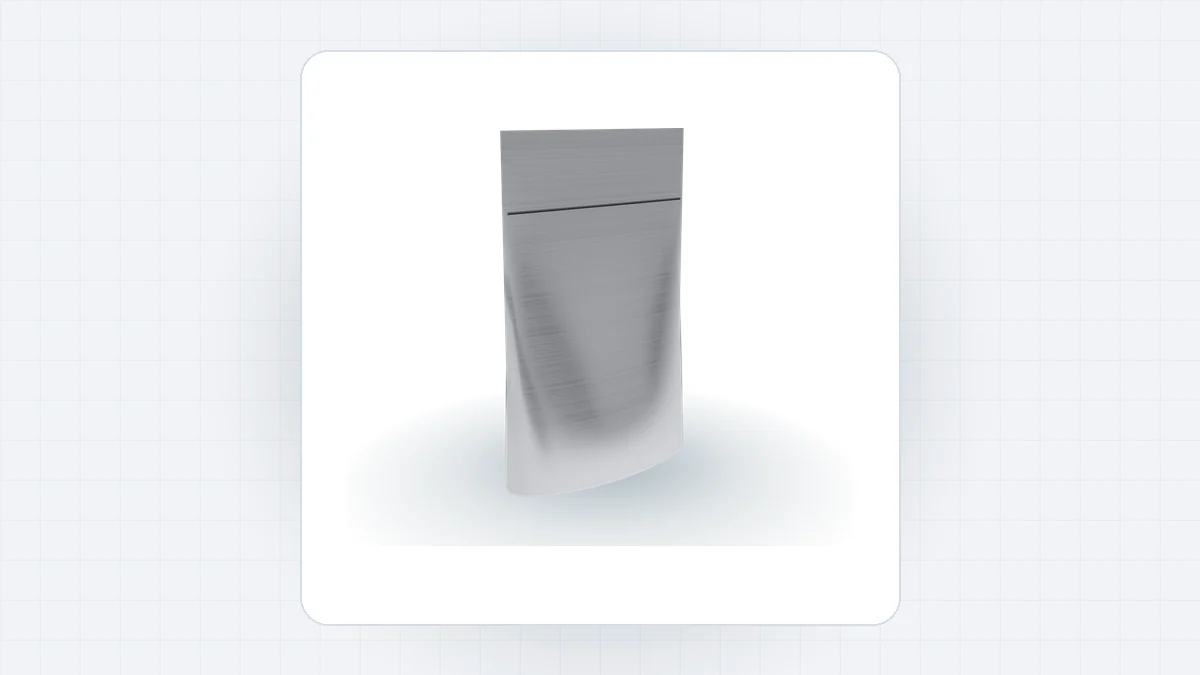
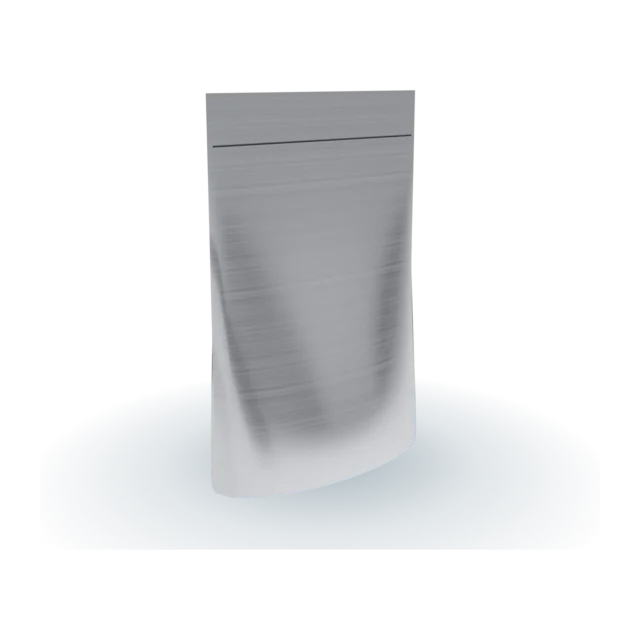
Are mylar bags smell proof? Not completely. A thick foil-laminate mylar bag with a clean, full-width heat seal greatly reduces how much odour escapes, but no flexible bag stops every trace of smell forever. Most odour leaks through the closure, not the film: a zip on its own leaks far more than a heat seal, and thin film, clear windows, pinholes and product caught in the seal all let smell out.
What “mylar” means in a mylar bag
Mylar is a trade name for a polyester film, biaxially oriented polyethylene terephthalate (BoPET). On its own, a thin clear polyester film is a decent but not outstanding barrier. What most people call a mylar bag is a laminate: several layers bonded together, each with a job.
- Outer layer: often polyester, which carries the print and resists scuffing.
- Barrier layer: aluminium foil, or a very thin metallised coating, which blocks light, oxygen, moisture and odour.
- Inner sealant layer: usually a polyethylene-type plastic, which melts to form the heat seal.
So the smell performance of a bag depends far more on its structure, and on how it is closed, than on the word “mylar” on the listing.
How smell escapes from a bag
Smell is made of volatile compounds in the air inside the bag. They escape in two ways.
- Through gaps. Any opening, such as a zip that is not fully pressed, a fold in a seal or a pinhole, lets air and odour out directly. This is by far the bigger route.
- Through the material. Plastics let small molecules pass through slowly. Intact metal foil is a very strong barrier, metallised coatings are good, and plain plastic film is weaker.
- Product in the seal line. A few crumbs or a film of powder in the seal area stops the layers fusing properly.
- Overfilling. A bag filled too close to the top leaves no flat area to seal and strains the zip.
- Residue on the outside. If you handle product and then the bag, the smell is on the outside. Clean hands or gloves, and wipe the bag if needed.
- Creases and flex cracks. Folding a foil bag hard, again and again, can crack the barrier layer.
- Pinholes. Sharp stalks, seeds or edges can puncture the inner layer from inside.
- A weak or partial seal. Too little heat, too short a dwell or a dirty sealer leaves gaps.
- Zip not fully closed. Run a finger along the full length, both ends included.
- Choose a foil laminate without a clear window if smell matters most.
- Pick the right size so there is headspace above the product. Our guide to mylar bag sizes explains how to measure usable space.
- Fill cleanly, using a funnel or scoop, so nothing reaches the seal area.
- Press out excess air gently before closing, without crushing the product.
- Close the zip, then heat seal above it across the full width.
- Inspect every seal and reseal any that show channels or wrinkles.
- Store packed bags in a second closed container, such as a lidded box or tub, for strong-smelling goods.
- Mylar bags are light, flat to store before filling and easy to print or label. Odour control depends heavily on the seal, and they can be punctured.
- Glass jars with a screw lid do not let odour pass through the walls, so the lid and its seal decide the result. They are heavier and can break.
- Rigid plastic containers with an inner seal or liner add a second barrier under the cap. Several of the Chubby Gorilla containers we supply have an inner seal or integrated liner and a tamper-evident band.
That is why two bags of the same size can behave very differently. A foil laminate with a poor seal will smell more than a slightly thinner bag sealed properly.
Which materials keep odour in best
Here is how the common bag materials compare for odour. This is general guidance; actual performance depends on the thickness and structure of each film.
| Bag material | Odour barrier | Notes |
|---|---|---|
| Aluminium foil laminate | Strongest | Opaque; blocks light too. Folding it sharply many times can crack the foil. |
| Metallised film laminate | Good | Lighter and more flexible than foil, but the metal layer is much thinner. |
| Kraft paper with a plastic or foil lining | Depends on the lining | The paper gives the look; the lining does the work. |
| Clear plastic or a clear window | Weakest | Lets light in, and the window area has no metal barrier. |
Our plain stock bags come in silver foil, holographic, black, white and kraft. The colour describes the look of the bag; it does not on its own tell you the barrier structure. If odour control matters for your product, ask us about the structure of the bag you are considering before you order.
Heat seals versus zip closures
The closure decides most of the result.
| Closure | Odour control | When to use it |
|---|---|---|
| Zip only | Fair; zips leak along the track | After the customer opens the pack, for reclosing |
| Heat seal above the zip | Best for an unopened pack | For sealing at filling, so the pack stays closed until first use |
| Heat seal with no zip | Strong, but not reclosable | Single-use packs and samples |
A zip is designed for convenience, not as a gas-tight seal. Even a well-made zip has tiny channels along its length and at the ends where it meets the side seals. A heat seal fuses the inner layers together across the full width of the bag, which closes those gaps. Many brands use both: a heat seal across the top for transport and shelf life, and the zip for reclosing after the customer tears the notch.
A good seal is flat, unbroken from edge to edge, and free of wrinkles and product. If you can see a channel or a bubble, odour can get through it.
The common reasons a bag still smells
How to get the best odour control from a mylar bag
Layering works because each barrier and seal cuts what gets through. A sealed bag inside a closed outer pack will always beat a single bag.
Testing your packs
A sniff test is useful but subjective. For a fairer check, pack a strongly scented product, seal the bags and leave them for several days in a clean, closed container, then compare. Test both zip-only and heat-sealed bags so you can see the difference for yourself. If you need figures for a specification, ask your supplier for the film’s barrier data, such as oxygen and moisture transmission rates, which are the usual indicators of barrier quality.
Mylar bags compared with rigid containers
A bag is not the only option for a strong-smelling product. Rigid packs close differently, and each has trade-offs.
Many brands combine them: a heat-sealed bag for the product and a rigid outer pack or box for display and transport. Whatever you choose, test it with your own product, because odour behaviour varies a lot between products.
Food and other regulated products
Odour control is not a legal standard, but the material can be. If you pack food, such as coffee, tea or spices, the bag must be suitable for food contact. The Food Standards Agency’s food contact materials regulations guidance covers materials such as packaging, printing inks and adhesive labels that come into contact with food. Ask your supplier for confirmation that the bag you choose is suitable for your product, and check the current rules with the relevant regulator or a legal adviser for your product.
Find the right bag
We supply stand-up mylar bags in 3.5 g, 7 g, 14 g and 28 g sizes, as plain stock bags, bags with a custom label or custom printed mylar bags. Tell us what you are packing and how strong its smell is through the quote form, and we will help you choose the bag and closure.
Frequently asked questions
Is mylar smell proof?
Mylar on its own is a polyester film. A foil-laminate mylar bag with a proper heat seal greatly reduces odour, but no flexible bag is completely smell proof over time.
Are mylar bags odour proof with just the zip?
Not reliably. Zip closures leak along the track and at the ends. For an unopened pack, heat seal across the bag above the zip and use the zip for reclosing after opening.
Do black or white mylar bags block smell better than silver?
The colour is the look of the outer layer. Odour control depends on the barrier layer inside the laminate and on the seal, so ask about the bag’s structure rather than choosing by colour.
Why does my sealed bag still smell?
The usual causes are product on the seal line, residue on the outside of the bag, a partial seal, creases or pinholes in the film, or a zip that is not fully closed.
What is the most smell proof way to pack a product?
Use a foil-laminate bag without a window, fill cleanly, heat seal above the zip, then store the sealed bag inside a second closed container.