

Mylar bag sizes: a chart for 3.5 g, 7 g, 14 g and 28 g bags
A plain guide to mylar bag sizes: typical dimensions for 3.5 g to 28 g stand-up bags, how to measure usable space and how to pick the right size for your product.
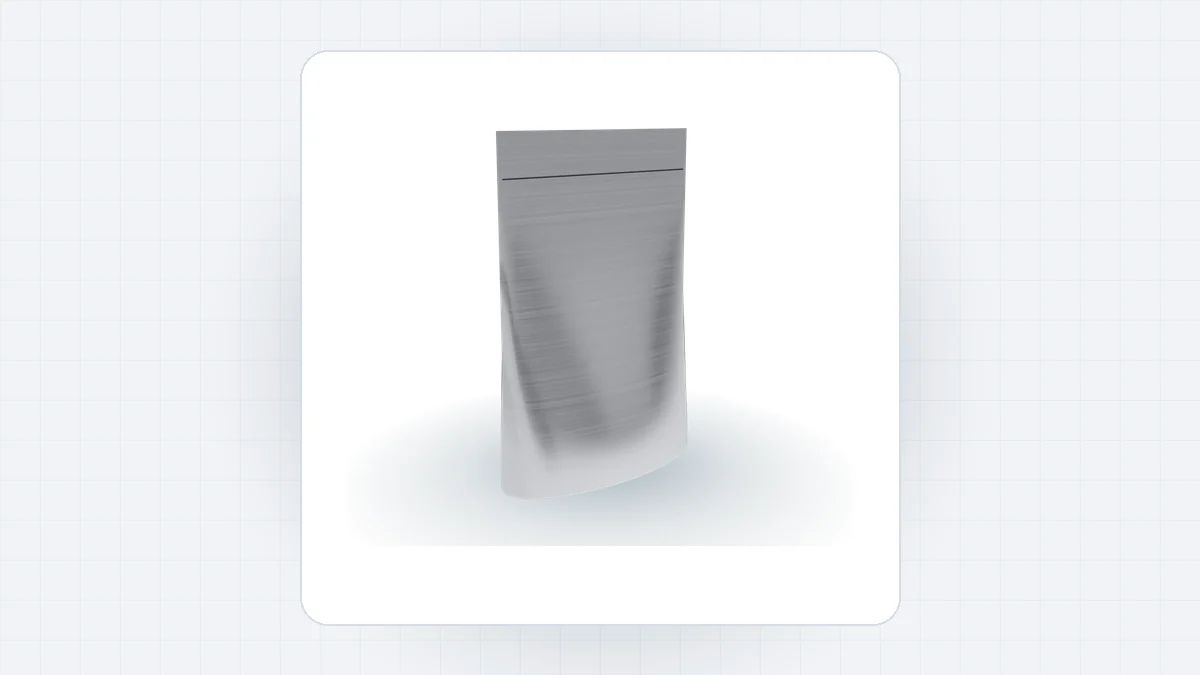
Mylar bag sizes are usually named by fill weight, 3.5 g, 7 g, 14 g and 28 g, rather than by their dimensions. As a rough industry guide, a 3.5 g stand-up bag is about 100 mm wide and 125 to 150 mm tall, and a 28 g bag is about 175 to 200 mm wide and 250 to 280 mm tall, but the exact size varies by supplier and by how dense your product is. Always check the product page and test-fill a sample before you order a full run.
Why mylar bags are sized by weight
Stand-up mylar bags became popular for dried, loose goods that are sold by weight, such as herbs, tea, coffee and other botanicals. Retailers think in fill weights, so suppliers name bags after the weight they are meant to hold. The common steps, 3.5 g, 7 g, 14 g and 28 g, follow the eighth, quarter, half and full ounce (one ounce is about 28.35 g).
The problem is that weight does not tell you volume. Ten grams of a light, fluffy herb takes up far more space than ten grams of ground coffee or sugar. So the gram size on a bag is a starting point for a typical light product, not a promise that any product of that weight will fit.
Mylar bag sizes chart (typical industry sizes)
The table shows typical dimension ranges you will see across the market for stand-up mylar bags. These are general industry figures, not the dimensions of our bags. Check the product page for the bag you are ordering, and ask us if you need exact measurements before you set your artwork.
| Bag size | Typical width | Typical height | Typical bottom gusset | Common uses |
|---|---|---|---|---|
| 3.5 g | About 100 mm (4 in) | About 125 to 150 mm (5 to 6 in) | About 50 mm | Samples, single servings of loose tea or herbs, small accessories |
| 7 g | About 120 to 130 mm (5 in) | About 180 to 200 mm (7 to 8 in) | About 50 to 60 mm | Trial packs, sweets, small retail units |
| 14 g | About 150 mm (6 in) | About 200 to 230 mm (8 to 9 in) | About 60 to 70 mm | Mid-size retail packs, loose leaf blends |
| 28 g | About 175 to 200 mm (7 to 8 in) | About 250 to 280 mm (10 to 11 in) | About 70 to 80 mm | Larger retail packs, bulk botanicals, coffee beans in small runs |
Use the ranges to sense-check a supplier’s listing. If a “3.5 g” bag is much larger than the range above, it may be built for a lighter product, or it may be a flat pouch rather than a stand-up bag.
How to measure a mylar bag
Bag listings usually give width by height, and sometimes the gusset. Here is what each figure means.
- Width: measured edge to edge across the front, with the bag flat.
- Height: measured from the bottom fold to the top edge. This includes the area above the zip and the top seal, which you cannot fill.
- Bottom gusset: the folded base that opens out so the bag can stand. A deeper gusset gives more volume and a steadier stand.
Finding the usable fill area
To work out how much room you really have, take the height and subtract the space above the zip, the zip itself and a margin for the heat seal. On most stand-up bags that is a meaningful chunk of the top of the bag. You also need some headspace above the product, so the zip closes cleanly and the top can be sealed flat without product caught in the seal.
Flat face for printing
For artwork, the area that matters is the flat face of the bag below the zip and above the gusset fold. A sticker or print placed across the zip line or into the gusset fold will crease. Measure that flat face on a sample bag before you size a label.
Choosing the right size for your product
Use the gram size as a first guess, then confirm it with your own product.
- Weigh out a real fill. Use the exact product, in the form you sell it.
- Test-fill a sample bag. Leave headspace, close the zip and check the bag stands.
- Check the seal area. If you heat seal above the zip, make sure no product sits in the seal line.
- Look at it on a shelf. A bag that is too big looks half-empty; one that is too tight bulges and stresses the seams.
- Size up or down. Dense products often go a size down; very light, bulky products often go a size up.
If you sell one product in several weights, keep the same width across the range where you can. It makes labels, shelf layouts and shipping boxes easier to manage.
The mylar bags we supply
We supply stand-up mylar bags in four sizes, 3.5 g, 7 g, 14 g and 28 g, in three ways:
| Option | What you get | Colours and finishes |
|---|---|---|
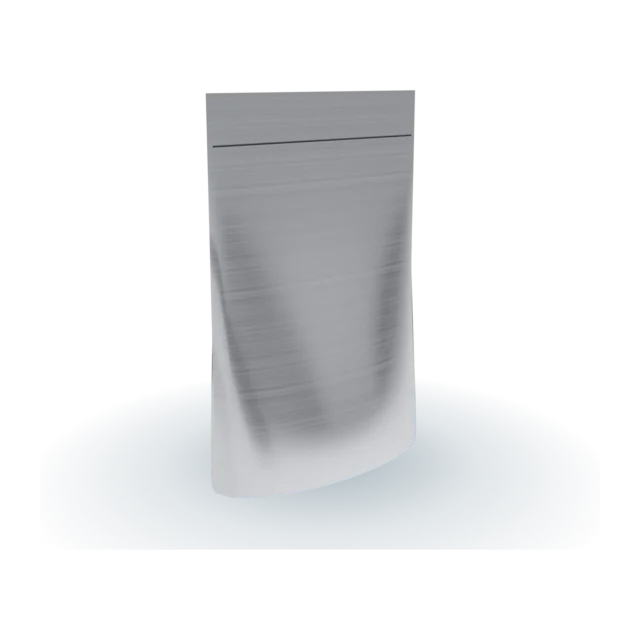
| Plain stock bags | A plain stand-up bag for your own labelling, with an optional printed sticker | Silver foil, holographic, black, white or kraft |
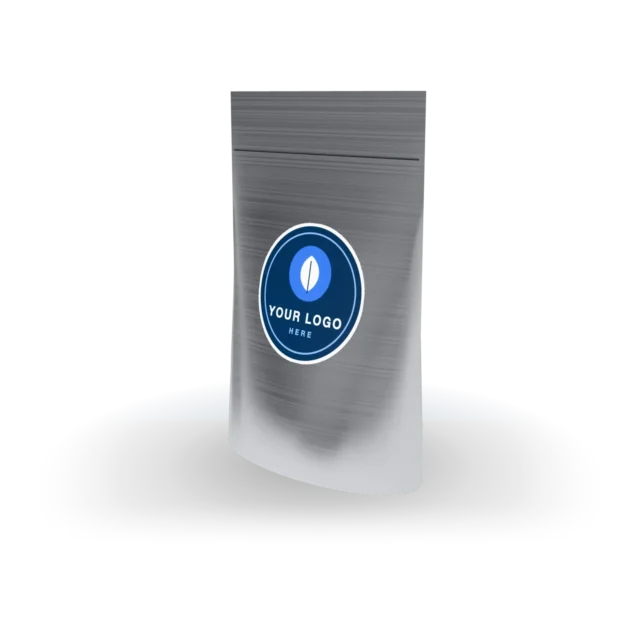
| Bags with a custom label | A stand-up bag with your printed sticker applied to the front | Silver foil or holographic bag; sticker in gloss, matte, clear, holographic, kraft or embossed |
| Custom printed mylar bags | Full-colour print on both sides of the bag | You choose the bag colour and finish in the studio |
For every option you can preview the bag in our 3D studio, and a proof is sent for approval before printing. The product page for each size is the reference for its exact measurements.
Sizing labels and print for each bag
Once you know the bag, size the artwork to the flat face.
- Leave a margin. Keep a clear border between the label edge and the bag’s side seals, the zip line and the gusset fold.
- Keep legal text readable. Small bags leave little room. Put the product name, quantity and any required information where it will not wrap around a seam.
- Think about the back. On a custom printed bag you can use the back for ingredients, batch codes and contact details. On a labelled bag, a second sticker on the back can do the same job.
- Check the gusset. Artwork near the base can disappear into the fold when the bag stands.
Our guide to custom sticker printing for bags covers label shapes and finishes in more detail.
Quantity marking and small packs
If you sell goods by weight, the bag size affects your labelling as well as your shelf look. GOV.UK guidance on packaged goods explains that the packaged goods rules cover products sold sealed between 5 g and 25 kg (or 5 ml and 25 litres) in the same quantity as other products of the same type, and sets out the minimum and average systems for packing. Its page on labelling packaged goods says the weight or volume must be on the label, marked permanently, easy to see and at a minimum height.
Note that a 3.5 g pack sits below the 5 g packaged goods threshold, but other rules, such as food labelling, can still require a quantity on the pack. Check the current rules with your local Trading Standards service or a legal adviser for your product.
Get the right bag first time
The quickest way to choose a size is to try one. Order a sample bag in the size you think is right, fill it with your product and check the fit before you commit to printed bags. Browse the full mylar bags range, or tell us your product and fill weight through the quote form and we will suggest a size and finish.
Frequently asked questions
What size is a 3.5 g mylar bag?
Across the market, a stand-up 3.5 g mylar bag is typically about 100 mm wide and 125 to 150 mm tall. Sizes vary by supplier, so check the product page for the exact dimensions of the bag you are ordering.
Will 28 g of my product fit in a 28 g bag?
Only if your product is about as dense as the light, loose goods the size is meant for. Denser products may need a smaller bag and very light products a larger one, so test-fill a sample first.
Do mylar bag sizes include the zip area?
Listed heights usually measure the whole bag, including the area above the zip and the top seal. The usable fill area is smaller, so subtract the zip and seal space when you plan a fill.
What size label fits a mylar bag?
Measure the flat face of the bag below the zip and above the gusset fold, then leave a margin from the side seals. That flat area is the maximum label size that will sit without creasing.
Which sizes of mylar bag do you supply?
We supply stand-up mylar bags in 3.5 g, 7 g, 14 g and 28 g sizes, as plain stock bags, bags with a custom printed label, or bags custom printed on both sides.